Most people don’t realise their neighbours are deliberately watching them. It happens silently. Someone stands at their kitchen sink with direct sightlines into your yard. Another neighbour watches from their deck whenever you’re outside. People develop anxiety about outdoor spaces without understanding why they feel so uncomfortable. The constant awareness of potential observation creates psychological weight that never gets addressed because it’s invisible. A custom outdoor privacy screens solution solves something nobody admits happens. Neighbours aren’t malicious. They’re just living their lives and happen to see into yours constantly. But the effect on homeowners is real. Outdoor spaces that should feel relaxing become places where people calculate whether they’re visible before going outside. This surveillance anxiety gets normalised so completely that people stop recognising how much it restricts their behaviour.
The Surveillance Reality
Neighbours don’t intentionally spy, but they inevitably see into yards positioned at certain angles relative to their windows and elevated spaces. A neighbour’s second-floor bathroom window overlooks backyards, creating unavoidable viewing angles nobody anticipates during original property design. Deck positions align perfectly with sight lines into adjacent properties. The geography of suburban living creates constant visibility that feels intrusive even without malicious intent. Standard fencing provides minimal help because sight corridors exist at angles fencing doesn’t adequately address. People sitting on decks see over fences into neighbours’ yards. Early morning and late evening light creates visibility that midday sun doesn’t. The problem shifts seasonally as sun angles change. Most homeowners never realise the exact locations where privacy gets compromised because they don’t systematically assess sight lines. They just feel uncomfortable outside without understanding why specifically.
The Behaviour Modification Trap
Living under observation changes how people behave in ways that feel completely normal to them but actually represent significant life restrictions. Conversations get quieter because subconscious awareness of potential listeners restricts volume and openness. Women wear more clothes outside even during hot weather because visibility affects comfort and freedom. Children receive implicit messages that backyards aren’t truly private spaces for authentic self-expression. Couples stop being physically affectionate outside when observed by neighbours. Families eat dinner inside rather than enjoying outdoor meals despite having dining spaces. This behaviour modification happens gradually and invisibly, making people forget what genuine freedom feels like. They accept restricted outdoor living as normal without recognising the prison they’ve created through acceptance.
The Aesthetic Failure
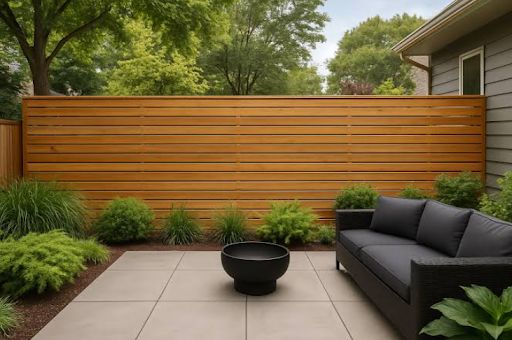
Generic screening attempts solve privacy through crude barriers that destroy landscape beauty and communicate desperation. People bolt fence extensions creating towering walls that look defensive. They hang plastic screening that looks temporary and cheap. They plant dense hedges creating fortress-like barriers. These solutions communicate anxiety rather than elegance to anyone observing them. They broadcast to neighbours that someone is desperate for privacy rather than naturally integrating. They create eyesores that reduce property value despite solving the underlying problem. Custom outdoor privacy screens work differently because they solve visibility without announcing the solution loudly or defensively.
The Sound Problem
Privacy means more than visual screening because sound travels across property lines, creating auditory intrusion that visual barriers don’t address adequately. Conversations get overheard despite visual privacy existing. Children’s play noise travels into neighbours’ spaces, creating conflict. Intimate moments have auditory components, making sound privacy essential alongside visual blocking. Generic fencing provides minimal sound dampening because noise travels through gaps and materials designed for visual blocking only. Proper screening incorporates acoustic properties addressing sound alongside sight. Dense materials absorb noise, preventing transmission. Strategic layering creates sound traps. Plants provide natural sound dampening through density and texture. This acoustic privacy often matters more than visual screening because sound travels when sight lines don’t exist.
The Planted Solution Advantage
Living screening through strategic plantings provides privacy solutions that evolve and improve over time, unlike static barriers that remain unchanged. Vines grow densely, filling spaces, and maturation increases coverage yearly. Shrubs mature into natural walls, becoming denser with age. Seasonal variation maintains visual interest, preventing monotony. Plant-based privacy feels natural and intentional rather than artificial. It integrates seamlessly with existing landscaping, creating architectural cohesion. It provides privacy that increases yearly as plants mature and establish. This approach creates solutions that improve rather than degrade through time and seasonal growth cycles.
Conclusion
Installing custom outdoor privacy screens addresses surveillance anxiety that standard solutions ignore completely throughout outdoor living spaces. Sight line assessment identifies exact visibility problems requiring specific solutions. Integrated design prevents the aesthetic disasters generic screening creates unnecessarily. Acoustic properties provide sound privacy beyond visual blocking considerations. Proper solutions restore genuine freedom in outdoor spaces, replacing surveillance anxiety. Behaviour modification reverses when true privacy eliminates constant observation awareness. Families rediscover outdoor living joy when psychological barriers disappear. Outdoor spaces become genuine retreats, restoring sanctuary and peace.