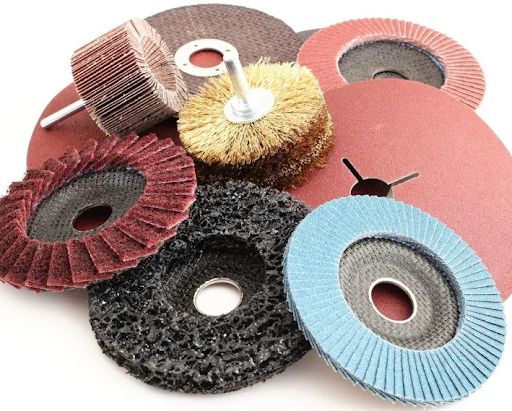
Most people buying abrasives have no idea they’re selecting the wrong products for what they’re actually trying to do. Workshop staff grab whatever sandpaper looks right without understanding grit selection matters more than most people realise. A contractor refinishing wood furniture uses the same abrasives as someone grinding metal. They shouldn’t. The materials work completely differently on different substrates. Wrong abrasive choices create problems nobody anticipates until damage appears mid-project. An abrasive supplies decision made carelessly can ruin an entire job. Materials get over-sanded, creating surface damage requiring expensive correction. The substrate itself sometimes gets damaged in ways that can’t be fixed. Then people blame the technique when actually the problem was wrong material selection from the beginning.
The Heat Generation Problem
Most people don’t understand that wrong abrasives generate excessive heat during use. This heat damages sensitive materials. Composite finishes soften and melt. Wood grain raises, creating a rough texture nobody wanted. Veneer delaminates. The heat builds up slowly during work but becomes apparent only after significant damage occurs. By then the substrate is ruined. Professional abrasive supplies engineered for specific materials control heat generation. They work at speeds that materials can tolerate. They create the friction needed for cutting without destroying what’s being worked. The difference between choosing the right abrasive and the wrong one often means the difference between fixable and catastrophic damage.
The Particle Loading Trap
Cheap abrasives clog rapidly with dust and debris, creating what’s called loading, where the abrasive surface becomes coated with material instead of cutting through it. Loaded abrasives stop cutting. Workers apply increasing pressure thinking they need to work harder. Actually, they need to replace the abrasive. But people don’t realise they’re loaded. They keep pushing. The clogged abrasive burnishes surfaces instead of cutting, creating polished areas that reflect light wrong and feel wrong to touch. Abrasive supplies designed properly resist loading through particle spacing and binding agents. They stay sharp longer. Dust clears away automatically during use. Loading happens slowly rather than suddenly, giving workers time to replace materials before damage occurs.
The Subsurface Damage Reality
Wrong abrasives don’t just damage surfaces visibly. They create subsurface damage that appears later. Microcracks develop invisibly. Materials stress. Finishes applied afterwards fail prematurely because the substrate is compromised. A customer complains that their refinished furniture is peeling after weeks when actually the damage happened during finishing when wrong abrasives were used. The contractor gets blamed for bad workmanship when the real problem was material selection nobody thought about. This hidden damage makes abrasive choice matter more than people understand. Quality supplies eliminate subsurface damage. Work lasts. Finishes hold. Customer satisfaction depends on material choices made hours earlier.
The Inconsistency Problem
Budget abrasives vary wildly in quality. One sheet cuts aggressively. The next one cuts slowly. Workers adjust pressure constantly, trying to compensate for material inconsistency. This variation creates uneven finishes where some areas get worked more than others. Skilled craftspeople notice immediately when switching between quality grades of abrasives. Their technique works on one but creates problems on another. Professional abrasive supplies maintain consistent performance throughout production. Workers don’t adjust technique between sheets. Finishes stay uniform. Quality stays predictable. Clients notice the difference in consistency even if they don’t understand it’s because of abrasive quality.
The Speed Reality
Professional abrasives work faster because they maintain cutting efficiency throughout use, eliminating wasted time replacing dull materials constantly. Jobs complete quicker using quality materials, allowing workers to accomplish more daily through genuine efficiency improvements. Workers spend less time on individual pieces, allowing more jobs to be completed daily, increasing productivity measurably. The time savings offset material costs immediately through reduced labour hours and increased throughput. Quality supplies aren’t expensive—they’re efficient investments in productivity rather than costs that should be minimised. Workers actually prefer quality materials because work becomes easier and frustration decreases when tools perform as intended. Budget supplies waste time through extended work periods, do-overs fixing problems, and constant material replacement, reducing profitability significantly.
Conclusion
Choosing quality abrasive supplies prevents catastrophic mistakes most people don’t anticipate or understand will happen from poor selections. Heat damage, loading, subsurface damage, inconsistency, and contamination all stem directly from wrong material selection made carelessly without understanding consequences. Professional results require professional materials matching specific applications rather than generic products used indiscriminately. Quality abrasives complete work faster, better, and with fewer surprises or problems appearing later. The investment in proper materials protects reputation and customer satisfaction simultaneously. Work quality improves immediately when material selection becomes intentional and informed rather than casual and random.