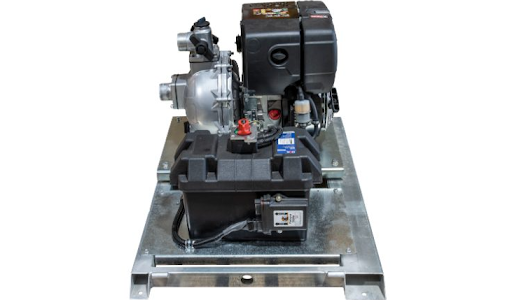
The security measures required in a building could be in place but not visible. Many good sprinkler systems are backed by the equipment that is intended to get water moving when necessary. Where the water source does not provide sufficient water pressure, a fire sprinkler pump system provides the pressure. It is that support that will maintain the sprinklers’ intended water flow during a fire. If you’re a user or a facilities team, it’s about reliable technology and not shiny technology. Preparatory investment should be made according to the real fire protection requirements of the building. It will be easier to appreciate the protection strategy if the contribution that the pump brings is understood.
Stronger Pressure
During a fire, there must be enough water pressure available for sprinklers to perform their intended functions. In high-rises, it can be particularly significant when you consider distance and elevation. A designated pump is used to close the sprinkler supply–demand gap. It is not an independent machine but is attached to the pipework and water source. This synchronised setup enables the engineers better control of water flow into protected areas. But consistent performance starts with correct calculations and design appropriate to the building.
Prompt Response
FPE would come into play when people have priorities. When the pressure in the system drops, this is typically an indicator that it’s time for the controller to turn on the pump. Water may then be supplied at the intended pressure, and users of the activated sprinklers can enjoy flow. This type of provision helps to get a response without having to find switches in case of emergency. A fire sprinkler pump system thus aids a carefully designed chain of protection in the form of a sequence of components. Clear procedures are especially valuable in times of stress, and its automatic operation is an added advantage.
Wider Coverage
Warehouses, offices and industrial buildings come in many shapes and sizes and don’t always have the same structure or fire protection system. The sprinkler design is affected by the various areas of the floor, areas of storage, as well as use throughout the building. The different types of protected areas have different requirements that must be satisfied through the pump choice. Suitable pressure and flow enable water to be delivered into the network to the operating sprinkler heads. As opposed to a one-size-fits-all solution, the design adapts to each property’s context. This allows pump-assisted sprinklers to be relevant on a wide variety of commercial premises.
Property Protection
Like fire extinguishers, an early response to a developing fire may be able to contain it to the area being irrigated. Limiting fire size growth can lessen the spread of damage to adjacent rooms. For businesses, this could help to maintain business equipment, records, and working environments. The pump is supposed to complement the water needed to operate the sprinklers. It doesn’t take the place of alarms, escape routes or the judgment of emergency responders. Rather, it contributes to a more holistic way of thinking: people, buildings and continuity.
Built-In Readiness
Maintenance is a regular operation that helps to make reliable equipment more reassuring. Functional tests and/or inspections are scheduled to ensure that pumps, controllers and valves continue to be functional. Records and procedures allow building staff to get to know the installation as well. Installing a professionally maintained fire sprinkler pump system can help to build confidence in the fire sprinkler system. Staff will have a better understanding of a mechanical installation when they receive regular attention. Familiarity is important, since preparedness is greatest in the case of clear responsibilities prior to an incident.
Smarter Integration
Pumps are used most effectively in an integrated fire protection design, not as “add-on” devices. The engineer will take the matters of water storage, power arrangements, controllers and pipework into account when specifying the equipment they need. Responsible staff can use monitoring signals to help to identify operating conditions, depending on the installation. The linked approach will help make inspections more focused and enable evidence-based decisions to be made about the care work that should be carried out. When building managers must comprehend why individual components were chosen, they can do so by reading through the documentation. Good integration is a useful ordering of a system of a simple purpose.
Conclusion
Reliable fire protection is based upon systems that activate collectively in case of emergency. To produce the water pressure necessary for designed sprinklers, a fire sprinkler pump system can be used. Automatic starting, engineered to suit the individual and planned maintenance all contribute to its useful function. The important thing to note is that the team of experts could provide owners with a clearer path towards preparedness when they evaluate their building’s needs. Regular procedures and equipment are familiar to staff and well cared for. None of the separate elements is foolproof enough to ensure safety; thus, evacuation techniques or protection measures continue to be necessary. However, maintaining the water supply for the sprinklers is an important aspect of good building management. The assurance of preparation is not based on assumptions but on practical choices.