
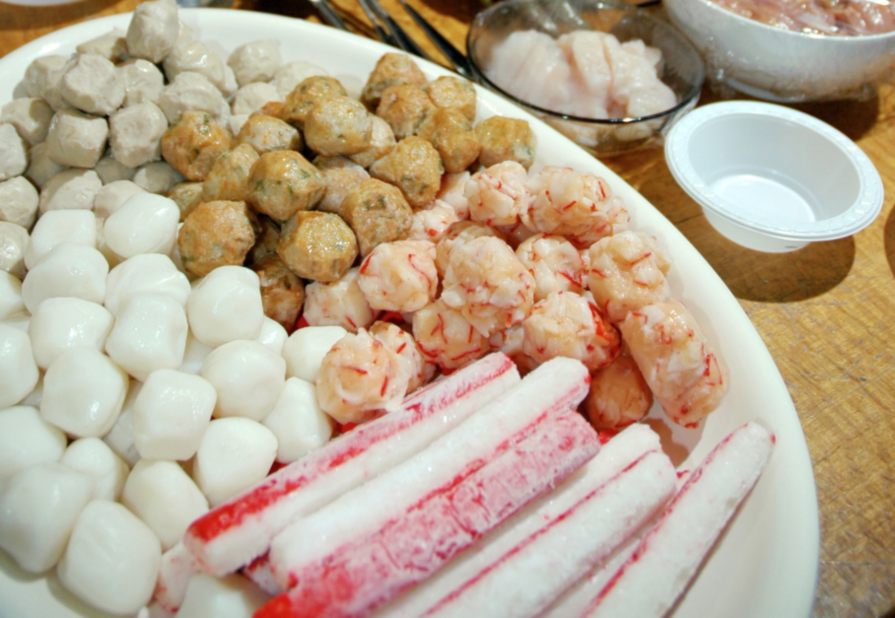
Ask a British chef about frozen seafood and the conversation usually turns to prawns, or to a bag of white fish fillets of uncertain origin. The Asian frozen seafood category is a different proposition entirely, and it is one of the least understood aisles in UK foodservice.
It is built largely on surimi — fish paste, seasoned and formed — and on the products that come from it. Fish balls, fish tofu, chikuwa, imitation scallop, fried fish cakes. These are not substitutes for a fillet of fish. They are their own tradition, eaten across China, Japan, Thailand, Malaysia and beyond, and they have properties that make them unusually well suited to commercial kitchens.
Understanding what they are is the first step to using them well.
What surimi actually is, and why it matters
Surimi is fish flesh that has been washed, minced and stabilised into a paste, then seasoned and shaped. The washing removes fat, blood and strong-flavoured compounds, which is why surimi products taste clean and mild rather than fishy.
Three consequences follow, and they are all commercially useful.
It has a bouncy, springy texture that holds up in liquid. A fish ball dropped into simmering broth stays intact and stays firm — something a fillet of white fish will not do.
It carries flavour rather than competing with it. In a hot, aromatic soup or a chilli-heavy broth, mildness is an advantage.
It is stable and portion-consistent. Every fish ball is the same size, the same weight and the same cook time, which is exactly what a busy pass needs.
That last point is worth dwelling on. Very few seafood products offer genuine portion control. This category does.
The products, and what each one is for
Fish balls. The staple. Plain fish balls are mild and springy, made for broth — noodle soups, hot pot, curry laksa. Fried fish balls have a golden skin and a firmer bite, and work as a snack, a skewer or a stir-fry component. Fried chilli fish balls add heat and sell well as a bar snack in their own right.
Cuttlefish balls. Denser and more savoury than fish balls, with a distinct seafood character. Good where you want the seafood note to be noticeable.
Lobster-flavoured balls. A premium-reading item at a non-premium cost. Frequently used in hot pot selections and seafood noodle bowls where the name does real work on a menu.
Fish tofu. Not tofu at all — a soft, golden, slightly sweet fish cake with a spongy texture that absorbs broth exceptionally well. One of the most underrated items in the category and a favourite in hot pot.
Fried surimi scallop. Shaped and textured to echo scallop, and a sensible way to give a dish a shellfish cue at a controllable food cost.
Chikuwa. The Japanese tube-shaped grilled fish cake, with a hole through the middle and a browned exterior. Sliced into oden, ramen and noodle dishes, or stuffed and served whole.
Thai fish cakes (tod mun pla). Bouncier and more heavily spiced than a British fish cake, made with curry paste and lime leaf. These are a finished dish rather than a component — fry and serve with a sweet chilli dip and they carry a starter listing on their own.
Steamboat selections. Pre-assembled mixed packs containing several of the above. The straightforward way to launch a hot pot dish without holding six separate SKUs.
The hot pot effect
Hot pot — steamboat, shabu-shabu, mala tang, depending on which tradition you are drawing from — has become one of the most talked-about dining formats in the UK, and it is precisely the sort of experience that spreads fast because it is social and photographs well.
For an operator, it is also an unusual proposition: the customer does the cooking. The kitchen’s job becomes broth, mise en place and plating raw ingredients. Labour at the pass drops dramatically, dwell time rises, and drink sales rise with it.
The frozen category is what makes this practical. A steamboat selection, a bag of fish tofu and a case of fish balls give you most of a hot pot offer from the freezer, with no prep, no waste on unsold portions and completely predictable costings. Sourcing the full set from one frozen Oriental food supplier keeps the delivery schedule simple and the specifications consistent between orders.
Even if you never put a burner on a table, the same products underpin a strong noodle soup section — and noodle soup is one of the highest-margin hot dishes in casual dining.
Beyond the freezer: dried seafood as flavour infrastructure
Sitting alongside the frozen lines is a category British kitchens rarely touch and Asian kitchens could not function without: dried seafood.
Dried shrimp are a seasoning, not a protein. Soaked and chopped, they bring a concentrated savoury depth to sambals, fried rice, stir-fried greens and Southeast Asian pastes.
Dried anchovies form the backbone of Malaysian, Indonesian and Korean stocks. A handful in a broth does what an hour of simmering bones does.
Dried squid brings a distinctive umami to soups and braises and is used as a snack in its own right.
Salted mackerel is a Southeast Asian staple, fried and served with rice and chilli.
These are inexpensive, extremely long-lived and give a kitchen depth of flavour that no bottled sauce quite replicates. If your menu is drifting towards Malaysian, Thai or Vietnamese dishes, this is where the authenticity actually comes from.
Handling, cooking and menu notes
Cook from frozen for broth applications. Fish balls and fish tofu can generally go straight into simmering liquid. Thawing gains you nothing and costs you texture.
Do not boil hard. A vigorous boil can split surimi products. A steady simmer keeps them intact and springy.
Fry at the right temperature. Fried items and Thai fish cakes need properly hot oil to seal rather than absorb. This is the single biggest quality variable.
Label allergens carefully. Surimi products contain fish and frequently other allergens depending on formulation, and dried shrimp and anchovy are crustacean and fish respectively. Keep current specifications on file.
Price with confidence. These are cost-effective ingredients, but the dishes they build — seafood laksa, hot pot, spicy noodle soup — carry strong price points. The margin here is genuinely good.